There is a kind of tiredness that sleep does not fix. You may sleep well, take a break, or spend a quiet weekend at home — and still feel emotionally drained. Conversations feel like effort. Small things irritate you. Work feels heavier than it should. Even things you once enjoyed may start feeling flat.
Many people call this stress. Sometimes it is. But sometimes, these are emotional burnout symptoms that are mistaken for laziness, moodiness, or just a bad phase.
Burnout does not usually happen overnight. It builds slowly, especially when we keep pushing through work pressure, family responsibilities, relationship stress, emotional labour, and the need to “manage everything”.
And because we are still able to function, we often ignore it.
But functioning is not the same as feeling well.
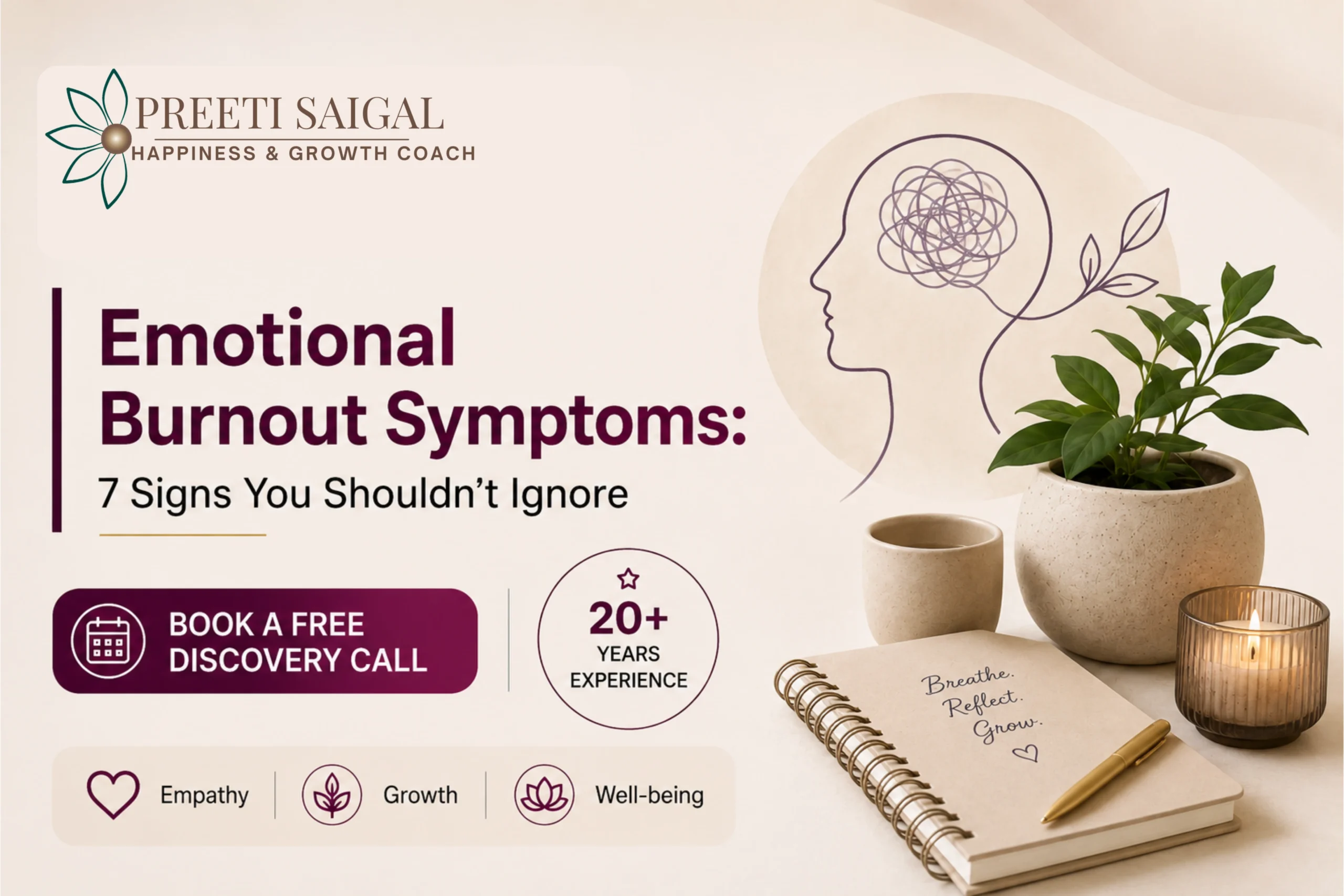
Here are seven signs of emotional burnout you should not ignore.
You feel tired even after resting
One of the most common emotional exhaustion symptoms is feeling drained even after sleep or rest.
This tiredness is not only physical. It feels emotional. You may wake up and already feel like the day is too much. Even simple tasks may feel heavier than before.
You may find yourself thinking:
“I want everyone to leave me alone.”
“Why am I so tired all the time?”
This is often one of the early signs of emotional burnout.
You get irritated more easily
When your emotional reserves are low, small things stop feeling small.
A delayed reply, a minor mistake, someone asking one more question, or a colleague following up may suddenly feel unbearable.
You may snap and then feel guilty.
But irritability is not always about the other person. Sometimes it is your system saying, “I have no space left.”
A useful question to ask yourself is:
That pause itself can help you respond with more awareness.
You lose motivation
Another sign of emotional burnout is loss of motivation.
Work you once cared about may feel mechanical. Personal goals may feel too far away. Even things you wanted for yourself — exercise, reading, meeting people, building something new — may start feeling like another task.
Many people mistake this for laziness.
But lack of motivation during burnout is often not laziness. It is emotional overload.
When the mind is tired, even meaningful things can feel difficult to begin.
Instead of forcing yourself into a big reset, start smaller.
Just: “I will take a 10-minute walk.”
Not: “I will become productive again.”
Just: “I will write down the three things that are weighing on me today.”
Small steps matter when your system is exhausted.
You feel disconnected from people
Burnout can make you withdraw emotionally.
You may avoid calls, stop sharing how you feel, or sit with people you love and still feel distant.
You may say “I’m fine” because explaining feels like too much effort.
This is one of the emotional fatigue and burnout signs that often goes unnoticed because, from the outside, you may still look functional.
You are present, but not really connected.
You are listening, but not fully absorbing.
You are doing what is expected, but emotionally you feel far away.
Ask yourself:
You do not need to explain yourself to everyone. But you do need at least one space where you do not have to pretend.
You struggle to focus or make decisions
Stress and burnout symptoms often affect mental clarity.
You may forget things, reread the same message, struggle to make simple decisions, or keep jumping from one task to another without finishing anything.
This does not mean you are incapable. It means your mind may be carrying too much.
Try this simple exercise.
Take a blank page and write down everything sitting in your mind — tasks, worries, conversations, reminders, fears, decisions.
Then divide the list into three parts:
What needs a conversation?
What is not mine to carry?
That last question is often powerful.
Burnout is not always caused by doing too much. Sometimes it comes from carrying too much that was never fully yours.
Anxiety and overthinking increase
There is a strong connection between symptoms of burnout and anxiety.
When you are emotionally exhausted, your mind may become more alert, not less. It may keep scanning for what can go wrong. It may replay conversations, create worst-case scenarios, or make it difficult for you to relax.
You may feel guilty when resting.
You may keep checking messages.
You may worry that if you slow down, something will fall apart.
Instead of saying “I should stop overthinking,” ask:
Maybe it is protecting you from failure.
Maybe from disappointing people.
Maybe from being judged.
Maybe from losing control.
When you understand the story behind the anxiety, you can respond to the real issue instead of only fighting the symptom.
Things you enjoyed no longer feel enjoyable
One of the deeper emotional burnout symptoms is loss of enjoyment.
You may still do things you once liked, but they no longer feel nourishing. Food, music, hobbies, achievements, conversations — everything feels dull or muted.
This can feel worrying.
But sometimes joy has not disappeared. Your system is simply too tired to receive it.
When we stay in survival mode for too long, the mind starts focusing only on what is urgent. Pleasure, play, rest, and connection begin to feel unnecessary.
Start by asking:
Maybe it was music. A walk. Prayer. A quiet cup of tea. Reading. Time with a friend. Sitting without your phone.
Recovering from emotional burnout is not only about reducing stress. It is also about slowly returning to yourself.
Emotional Burnout Symptoms in Women: Why They Are Often Missed
Emotional burnout symptoms in women can sometimes be harder to recognise because many women continue functioning even when they are exhausted.
They may manage work, children, parents, home, relationships, social expectations, and emotional labour — while quietly feeling depleted inside.
Burnout in women may show up as guilt while resting, snapping at loved ones, feeling resentful, carrying the mental load, feeling unseen, or believing that everyone depends on them but no one really notices them.
The deeper question is not only, “How do I take a break?”
It is also:
Sometimes, we also need to separate healing from blame. Understanding where our patterns came from can be useful, but healing is not about staying stuck in blame.
How to Recover from Emotional Burnout: Practical First Steps
Learning how to recover from emotional burnout does not always require a dramatic life change.
It begins with noticing what is happening and telling yourself the truth.
“This is not sustainable.”
“I need support.”
“I cannot keep being available to everyone while being absent from myself.”
A few practical steps can help
- Set one clear boundary.
- Reduce one unnecessary commitment.
- Ask for help before you reach breaking point.
- Take short pauses during the day.
- Name what you are feeling instead of pushing it away.
- Sleep and eat in a way that supports your body.
- Reconnect with one activity that feels like you.
Also try this sentence when emotions feel unclear:
For example:
“I feel overwhelmed about work when I see messages after dinner.”
“I feel unsupported at home when I have to remind everyone about everything.”
This simple structure helps convert a vague emotional cloud into something you can understand and work with.
When to Seek Coaching for Burnout and Emotional Exhaustion
Professional support can help when burnout starts affecting your daily life, relationships, sleep, work, health, or emotional stability.
You may want to seek therapy or coaching for burnout if you feel emotionally exhausted most days, constantly anxious, disconnected, hopeless, irritable, or unable to return to your usual self despite trying.
Seeking support is not weakness.
Sometimes it is the first honest step toward recovery.
Healing does not mean erasing what happened or pretending that everything is fine. It often means learning how to relate to your past, your patterns, and your present with more awareness.
FAQs on Emotional Burnout Symptoms
What are the early signs of emotional burnout?
Early signs of emotional burnout include constant tiredness, irritability, low motivation, difficulty focusing, emotional withdrawal, anxiety, and feeling overwhelmed by small tasks.
How is emotional burnout different from normal stress?
Stress usually feels like pressure from having too much to do. Emotional burnout feels more like depletion. You may feel emotionally empty, disconnected, unmotivated, or unable to keep functioning in the same way.
How do I recover from emotional burnout?
Recovery begins with rest, boundaries, reducing unnecessary commitments, asking for support, and understanding the thoughts, emotions, or patterns that are keeping you overloaded. Small, consistent steps usually work better than forcing a complete life reset.
Can emotional burnout happen because of work?
Yes. Emotional burnout from work can happen when pressure, responsibility, lack of support, unclear expectations, or constant availability continue for too long. It may also combine with personal, family, or relationship stress.
When should I seek coaching or therapy for burnout?
You should consider coaching / therapy if burnout affects your sleep, health, relationships, work, emotional stability, or daily functioning. Support can also help if you feel anxious, numb, hopeless, irritable, or unable to recover despite trying.
Final thoughts
Emotional burnout often starts quietly.
Then irritation.
Then disconnection.
Then anxiety.
Then numbness.
And somewhere along the way, you may stop feeling like yourself.
But burnout is not the end of your capacity. It is a signal that something in the way you are carrying life needs to change.
Notice what is draining you.
Name what you feel.
Create one boundary.
Ask for support.
Take one responsibility off your plate.
Because healing from burnout is not about becoming the old version of you who could tolerate everything.
It is about becoming a more aware, supported, honest version of you — one who does not need to keep breaking down to prove she is strong.
Ready to regain emotional balance?
If you are struggling with stress, burnout, emotional exhaustion, or feeling disconnected from yourself, you do not have to work through it alone.